Investing in real estate is a cornerstone of wealth building, particularly in the Philippine market. One of the most common entry points for both middle-income earners and high-net-worth individuals (HNWI) is the pre-selling stage.
Whether you are looking at a sleek high-rise condo in a central business district or a sprawling house and lot in an emerging suburb, buying before the "first stone is laid" offers unique advantages and notable risks.
Here is how to navigate the pre-selling landscape to ensure your investment stands on solid ground.
The Benefits: Why Buy Before It’s Built?
The primary allure of pre-selling is the financial leverage it provides. Because you are buying a promise of a future structure, developers offer incentives to offset the wait.
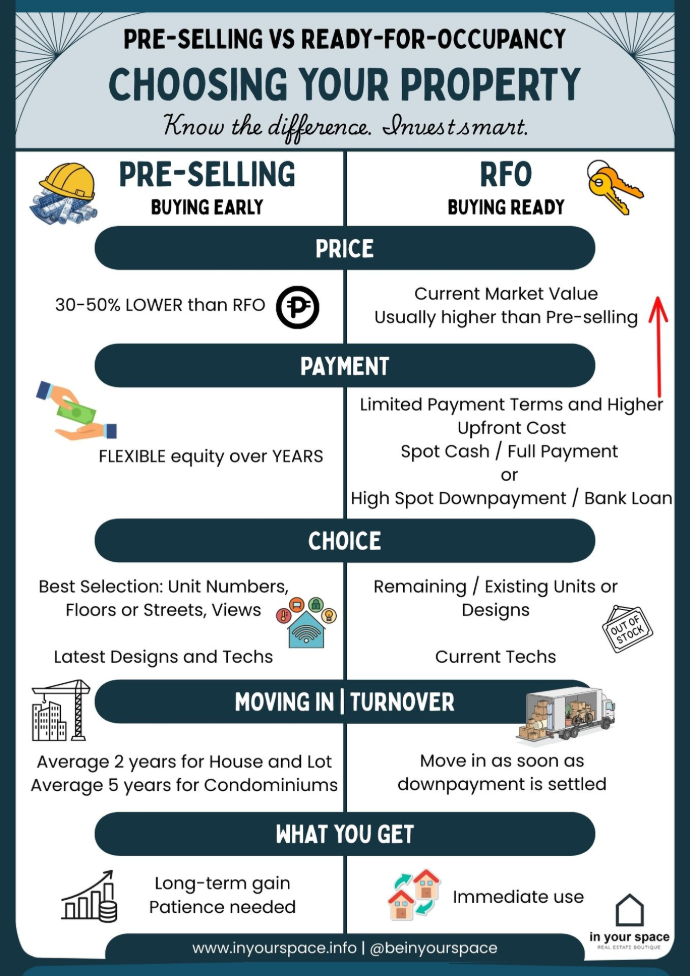
Introductory Pricing: Pre-selling units are typically priced 30% to 50% lower than Ready-for-Occupancy (RFO) units. This "early bird" pricing creates instant equity once the project is completed.
Flexible Payment Schemes: Unlike RFO units that often require a large "spot" down payment, pre-selling projects allow you to spread the equity over several years. This is ideal for maintaining cash flow while building an asset.
"First Dibs" on Prime Units: Early investors get the best choice of floor level, corner units, or those with the most auspicious views (like a sunset view or a unit facing the amenities).
Modern Standards: Since these projects are in the pipeline, they often incorporate the latest in sustainable design, smart-home technology, and contemporary lifestyle amenities.
The Risks: What Every Investor Should Watch For
While the potential for high ROI is significant, pre-selling is not without its pitfalls. Successful investors focus on "risk mitigation" rather than just "profit chasing."
Construction Delays: Changes in government regulations, supply chain issues, or developer mismanagement can push back turnover dates.
"The Render vs. Reality" Gap: A glossy brochure may not always match the final product. Changes in materials or minor layout adjustments can happen during construction.
Market Fluctuations: While real estate generally appreciates, a sudden economic shift could mean that by the time the unit is turned over, the interest rates for your bank financing may be higher than anticipated.
Developer Reliability: The biggest risk is a project being abandoned. Always verify if a developer has a proven track record of finishing what they start.
Tips for Assessing Your Next Investment
Before signing the Reservation Agreement, run your potential property through this checklist:
| Factor | What to Verify |
| The Developer | Check their License to Sell (LTS) via the DHSUD website. Research their past projects. Did they deliver on time? |
| The Location | Don't just look at the site today. Research planned infrastructure (new subways, highways, or malls) that will drive future value. |
| The Contract | Review the "Delay Clause." Most contracts allow for a grace period (often 12 months) beyond the target date. |
| The Hidden Costs | Ask about turnover fees, documentary stamp taxes, and moving-in fees. These are often not included in the basic contract price. |
Condos vs. House & Lot: Which Pre-Selling Path?
The "right" choice depends on your investment strategy.
Pre-selling Condos are excellent for those seeking passive rental income. Their proximity to business hubs makes them high-demand for professionals and expatriates.
Pre-selling House & Lots are often better for long-term capital appreciation. You are investing in the land itself, which historically holds and increases in value more reliably over decades.
How We Can Help
Navigating the technicalities of real estate conveyance and title verification can be daunting. At in your space, we specialize in guiding clients through the complexities of buying, selling, and leasing to ensure your portfolio grows safely.